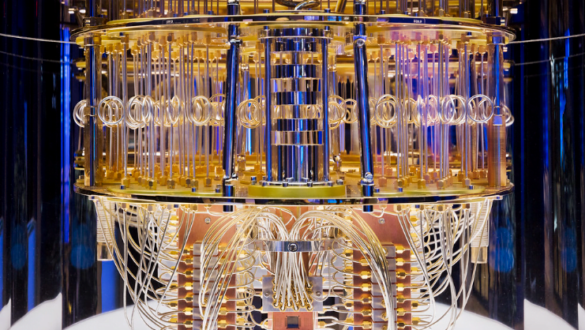
3D Metal Printing will be Tried in Space
3D Printing Logam ini Dikembangkan Oleh Airbus untuk European Space Agency (ESA)

This month, the European Space Agency (ESA) will conduct metal 3D printing trials on the International Space Station (ISS). The first metal 3D printer to be used in space arrived Thursday during the Cygnus NG-20 resupply mission, which brought the 397lbs printer to researchers who will conduct testing on the ISS.
Introduction to 3D Printing Metal in Space
Astronaut Andreas Mogensen will install the printer, which was developed by Airbus for the European Space Agency. This machine will then be controlled and monitored from Earth. Although polymer-based 3D printers have been used on the ISS before, metal 3D printing in orbit is said to be more challenging. This machine will use a form of stainless steel which is often used for water treatment and medical implants because of its corrosion resistance.
The Technology Behind the Metal 3D Printing Process
After the stainless steel wire is inserted into the print area, the printer melts it with a laser that is claimed to be one million times more powerful than a regular laser pointer. The printer then adds the melted metal to the mold. The melting point of the metal is around 1,400°C, and the printer will operate in a completely enclosed box. Before a printer can operate, it needs to exhaust oxygen into space and replace it with nitrogen. Otherwise, the melted metal will oxidize when exposed to oxygen.
Challenges and Potential for Success
With higher temperatures than plastic 3D printers (which heat up to around 200°C), “the safety of the crew and the Station itself must be guaranteed — while maintenance possibilities are also very limited,” said ESA technical officer Rob Postema. “However, if successful, the strength, conductivity and stiffness of the metal will take the potential of 3D printing in space to a new level.”
If this month’s test is successful, it will make a major contribution to the future of the ability to print necessary parts and tools while in space. This could help, for example, in building a lunar base using recycled materials or altered regolith (lunar soil and rock), without forgetting the cost, weight and time required to ship all the spare parts that might be needed for a future Mars mission.
Conclusion
While 3D printing may become commonplace on Earth, the challenges of printing in zero gravity space or even low gravity on the moon are another story. Innovations like these show how technology continues to advance, even beyond the limits of our planet’s atmosphere. Maybe one day, humans will be able to print whatever they need in remote places of the universe.
FAQ (Frequently Asked Questions)
- Why is 3D printing metal considered more difficult than plastic in aerospace?
- Metal 3D printing requires higher melting temperatures, and crew and equipment safety is a major concern in testing in space.
- How could the metal 3D printing process on the ISS help future missions, such as missions to Mars?
- If successful, metal 3D printing could help print necessary parts and tools in space, reducing the cost and weight of those that have to be brought from Earth.
- Why is building a moon base with recycled materials relevant in this context?
- Using recycled materials or regolith on the moon could reduce dependence on shipping materials from Earth, making space exploration missions more efficient.