Is the campus still relevant in the AI era?

changes in the world of higher education
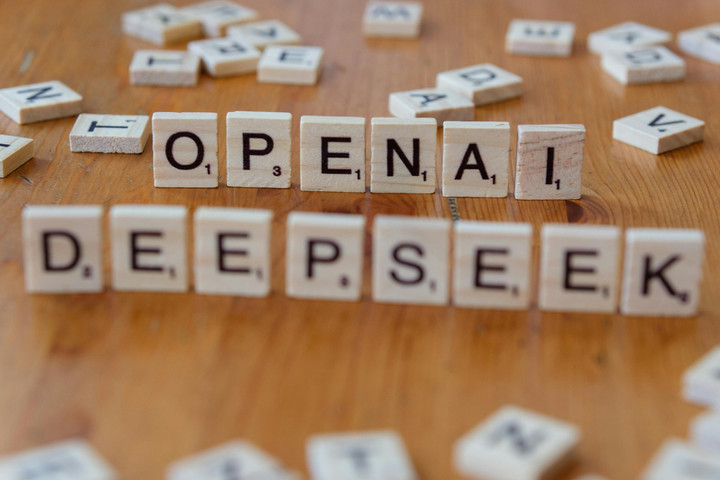
The classroom is no longer the only place to study. Today’s students can understand the concepts of economics, law, programming, and even philosophy in just minutes through digital platforms and artificial intelligence such as chatgpt, Deepseek and other AI. If the answer to the paper assignment can be generated in a few seconds, the basic question becomes serious: “Is the campus still relevant?”
This question is not a form of pessimism towards higher education, but a critical reflection on the change in the knowledge landscape. We are living in an era where information is abundant, but the depth of understanding is often thinning. The campus, which has been positioned as the center of science production, is now facing an existential challenge, namely competing with algorithms.
The gap between theory and industry
One of the old criticisms of higher education is the gap between theory and industry needs. Many graduates feel “shocked” when entering the world of work. What has been learned over four years feels different from the reality of the field.
Conceptually, higher education is designed to build a theoretical foundation. In the perspective of educational philosophers like John Dewey, education should not be separated from real experience. However, in practice, many curricula are still rigid, slow to adapt, and too administrative.
The industry is moving, especially in the digital sector. Skills such as data analytics, AI literacy, digital marketing, to technology-based problem solving develop in a matter of months. Meanwhile, curriculum updates on campus can take years. As a result, students often learn old theories to deal with the changing job market.
But on the other hand, the industry also often complains about the lack of critical thinking skills, communication, and professional ethics from new graduates. This means that the problem is not only the campus is too theoretical, but may also focus too much on memorization rather than forming a mindset.
Students learn for grades or competencies?
Another phenomenon that should be criticized is the student learning orientation. An evaluation system that emphasizes too many numbers encourages a pragmatic mentality, the important thing is to pass, not understand. Tasks are done for the sake of deadlines, not for the sake of exploration of ideas.


In the theory of educational motivation, the concepts of extrinsic motivation (external motivation) and intrinsic motivation (internal motivation) are known. When students only pursue grades, the dominant one is external motivation. Whereas meaningful learning is born from curiosity and sincere intellectual encouragement.
The problem is, our education system often does not make room for productive failure. Students are afraid of being wrong for fear of dropping grades. In fact, innovation is actually born from experiments and trial-error. This is where the campus paradox appears where it claims to be a free thinking space, but the practice is very bureaucratic.
If the learning orientation does not shift from “value” to “competence”, then the presence of AI will only make the situation worse. Students will be increasingly tempted to use technology just to complete tasks, not to deepen their understanding.
ai replace the paper assignment?
The entry of generative AIs such as ChatGPT, Deepseek, and other AIs into the academic room is changing the game. The assignment of a paper that used to be an indicator of understanding can now be produced in seconds with a neat structure and convincing references. Even lecturers sometimes find it difficult to distinguish which is the original writing of students and which is the result of the machine generation.
Does this mean AI is damaging education? It’s not that simple. Technology is basically neutral. The problem is the learning design. If the task only requires the reproduction of information, then AI is indeed superior. However, if the task requires personal reflection, contextual analysis, and synthesis of real experience, AI cannot completely replace humans.
This is reminiscent of Bloom’s taxonomy in education, which divides the cognitive level from memory to creation. AI is very strong at the level of remembering and understanding, even quite good at analyzing. But authentic reflective abilities born of existential experience remain the domain of humans.
In other words, it is not the campus that must lose to AI, but the evaluation method that must evolve.
Is the campus out of date?
If the campus maintains a one-way model, lecture lecturers, students take notes, multiple choice exams. Then the answer may be yes, the campus will be outdated. But if the campus is able to transform itself into a space for dialogue, collaboration, and cross-discipline exploration, then the relevance is even stronger.
In the AI era, information is no longer a rare item. What is rare is the wisdom in managing information. The campus should be a place to train critical reasoning, ethics, empathy, and the ability to think systemicly, things that cannot be fully automated.
In addition, the campus has an irreplaceable social function, namely building networks, forming character, and creating space for interaction between ideas. Higher education is not only about the transfer of knowledge, but about the formation of intellectual identity.
But this transformation requires courage. The curriculum must be more adaptive. Collaboration with the industry needs to be strengthened without sacrificing academic independence. AI literacy should be part of the student’s basic competencies, not just additions.
Relevance is determined by adaptation
The question “Is the campus still relevant?” In fact, it is not about the physical existence of the university, but about its ability to adapt. History shows that institutions that fail to read the changing times will be abandoned.
AI is not a threat to the campus, but a mirror. It shows the weakness of the system that is too administratively oriented and less reflective. If the task can be replaced by a machine, perhaps what needs to be questioned is the design of the task, not the technology.
In the end, the campus will still be relevant if it is able to do one thing that algorithms cannot do, such as forming people who think, not just processing information.
In the era of chatgpt, Deepseek and other AIs, maybe what we need to ask is not “Is the campus still relevant?”, but “Is the way we study on campus still relevant?”