Is the World Ready for AI Panic?

The Market’s Fear of AI: A New Era of Uncertainty
On the 3rd, the New York stock market witnessed a dramatic drop in market capitalization, with approximately $300 billion—equivalent to about 436 trillion Korean won—vanishing from software and data stocks. This sudden loss was attributed to growing concerns that AI automation tools developed by Anthroptic could disrupt the core operations of existing software companies. Investors, caught in a wave of temporary panic, quickly sold off their shares, highlighting the deep-seated fear that AI poses not only to industries but also to human emotions.
AI’s influence extends beyond physical changes in daily life; it also taps into the very essence of human nature—fear. This fear is not new. The U.S. has long recognized the potential of AI to reshape society. In 2016, the Obama administration declared that AI was not just an abstract concept but a critical technology that needed strategic attention. A report titled “Preparing for the Future of AI” outlined the government’s intention to monitor and address AI’s impact on the labor market, economy, and security. It also emphasized the need for expanded national research and investment, effectively predicting that fears driven by AI would lead to significant market losses within a decade.
The U.S. did not stop at theoretical discussions. In May 2018, then-Defense Secretary Jim Mattis delivered a secret memo to President Donald Trump, revealing that the country was falling behind China in the AI race. This prompted Trump to sign an executive order titled Maintaining American Leadership in Artificial Intelligence. This initiative laid the groundwork for Congress to secure legal and financial support for AI development. Even the recent 2026 fiscal year federal budget bill, which narrowly passed Congress, includes tens of billions of dollars in AI-related funding. Over ten years and three administrations, the U.S. has steadily advanced its long-term national strategy.
With government backing, both academia and the private sector have flourished. At Princeton University, a research team led by professors is using AI to map the brain of fruit flies, which share genetic similarities with humans. Meanwhile, at the Massachusetts Institute of Technology (MIT), researchers are working tirelessly to develop humanoid robots that can give AI a human-like form. This collaboration between government and private sectors marks a total war for AI leadership.
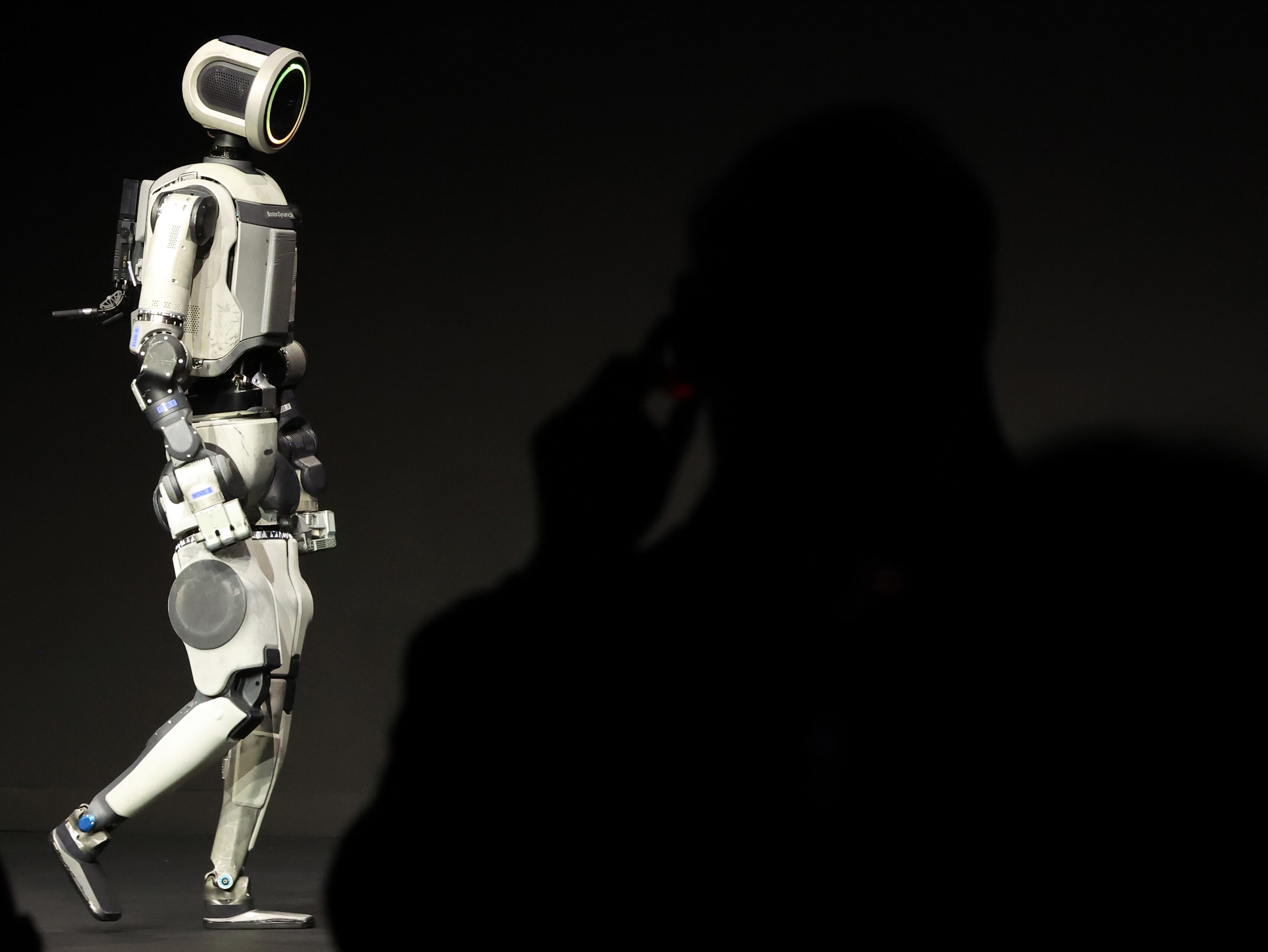
The opposition from the Hyundai Motor Company union to deploying humanoid robots on production lines reflects a broader concern about job security. While the union’s resistance is problematic, past governments also share responsibility for not adequately addressing AI’s societal impact. The Hyundai case serves as a warning of the “AI panic” that may soon affect Korean society.
Preparing for the Future of AI
How prepared are we for AI’s impact on our lives? Blind investments without a clear plan are not the solution. Regardless of political changes, a stable national strategy must be established to reassure the public and navigate global competition. Once fear takes hold, it may be too late to reverse the damage.
Membership Benefits
For those interested in staying informed, there are various membership options available. A monthly membership costs 5900 won, while newspaper readers can enjoy it for 2900 won. The Chosun Membership offers access to 8 different newspapers and magazines worth 55000 won. Additionally, members receive 7000 points that can be used like cash for shopping, making it an economical choice.