WIFI Rakyat, HiFi Air, and Orbit Telkomsel Fight for the Middle Market

Competition for Wireless Internet Services in Indonesia Enters a New Chapter
Competition in wireless internet services, especially fixed wireless access (FWA), has entered a new phase with the emergence of HiFi Air from PT Indosat Tbk. (ISAT). This service offers a package priced at IDR 100,000 per month with a quota of 125 GB, which is a challenge for other operators such as PT Solusi Sinergi Digital Tbk. (WIFI) which is strengthening People’s Internet services.
On the other hand, WIFI continues to build partnerships to improve home internet services, but has to face old competitors such as Orbit from Telkomsel. Orbit offers a 125 GB package for IDR 179,000, which is more expensive than HiFi Air and Internet Rakyat.
ICT Institute Executive Director Heru Sutadi assesses that this dynamic could be the start of price competition in the non-fiber FWA segment. He stated that the presence of HiFi Air 125 GB at a price of IDR 100,000 directly lowered market expectations in the wireless home internet class.
“When compared with Internet Rakyat which offers unlimited at the same price, and Telkomsel through Orbit which is more premium, the market will be more sensitive to value for money,” said Heru to Bisnis, Monday (9/3/2026).
Heru emphasized that competition is not only about cheap rates, but also positioning among players in the middle and lower classes. On the one hand, there are offers of cheap prices and large or unlimited quotas, while on the other hand there are operators who focus on network quality and service stability with relatively higher rates.
“This is not just a matter of who is the cheapest, but how operators position themselves between price, quality and user experience,” he said.
Sustainability of the FWA Tariff Model IDR 100,000 Per Month
Regarding the sustainability of the FWA tariff model of IDR 100,000 per month, Heru believes that this scheme is still viable as a business with several notes. He reminded that 4G/5G-based FWA still shares spectrum with cellular services, so traffic spikes have the potential to increase the cost per gigabyte that operators have to bear.
Large or even unlimited quota packages, he continued, will almost certainly carry the risk of network congestion. “The IDR 100,000/month model can be sustainable if operators manage network capacity in a disciplined manner and consumers receive quality service, not just gimmicks,” said Heru.


He predicts that implementing a fair usage policy (FUP) or speed management will be a necessity to maintain service quality amidst the pressure of low tariffs.
Factors that Influence the Sustainability of Cheap FWA Business
Heru explained that the sustainability of the low-cost FWA business really depends on several factors such as customer density in an area, the level of utilization of the base transceiver station (BTS), and the characteristics of the service area. Aggressive tariff schemes are considered more realistic to implement in areas where network capacity is still loose, compared to traffic-dense areas in big cities where cellular networks are already approaching optimal limits.
“Without careful capacity management, cheap packages can actually damage the customer experience and ultimately harm the operators themselves,” he said.
Potential of the Non-Fiber Home Internet Market in Indonesia
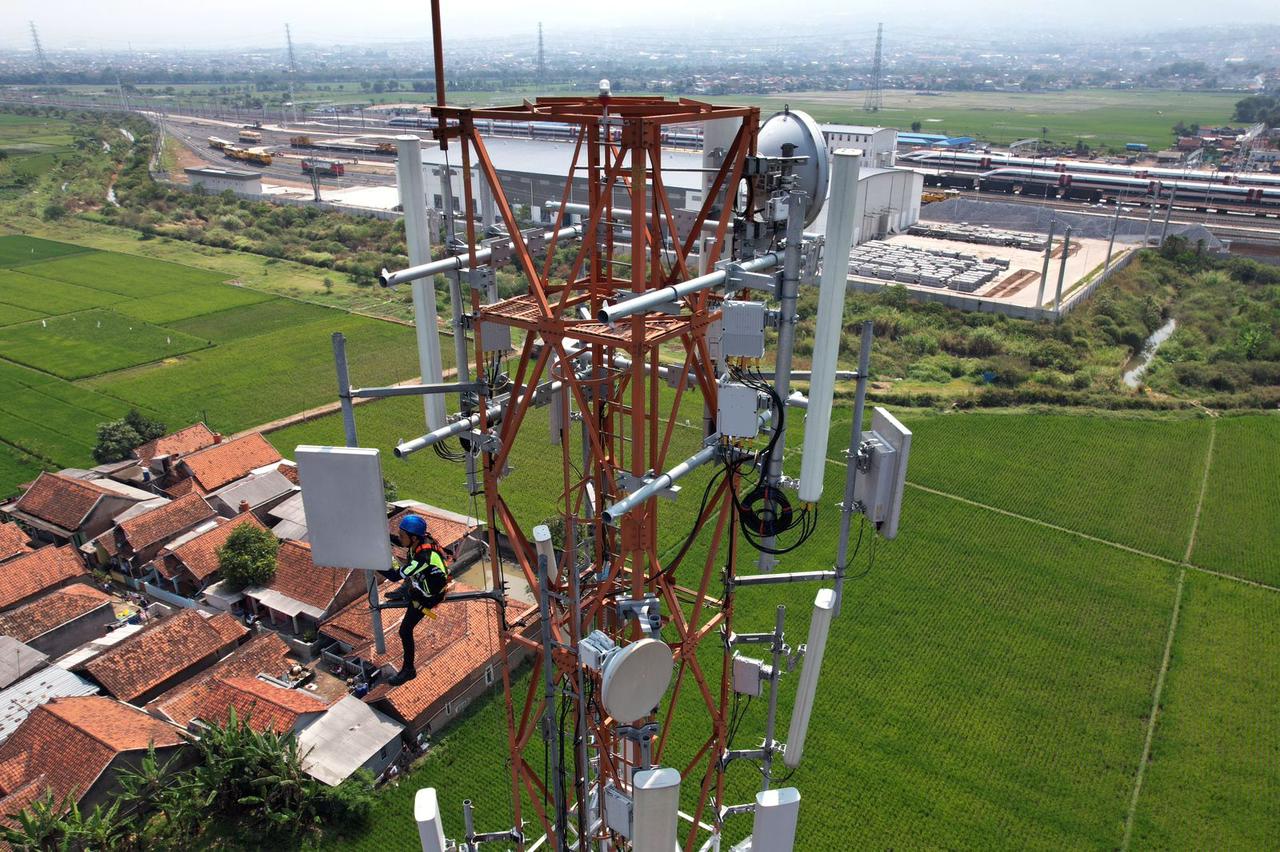
On the other hand, Heru assesses that the potential for the non-fiber home internet market in Indonesia is still wide open. Penetration of fiber optic networks is currently not evenly distributed outside big cities, while demand for household connectivity continues to grow for remote work, online learning, and micro, small and medium enterprise (MSME) activities.
“FWA is a fast solution because it does not require expensive and long cable pulling investments,” said Heru.
According to Heru, FWA has the potential to be a transitional and even semi-structural solution to reduce the digital gap in various regions as long as prices remain affordable and service quality is stable. However, from a long-term perspective, he still sees fiber networks as superior infrastructure in terms of capacity and stability.
“FWA can bridge the need for home internet access in areas that are not yet served by fiber, but in the future strengthening the cable network will remain important to support the continued increase in data traffic growth,” he said.