Elderly Targeted by AI Deepfake Government Scam Schemes
The Rise of AI Deepfakes Targeting the Elderly
At a civil service window in a community center in Mapo-gu, Seoul, an elderly man named Lee, 74 years old, showed an employee his smartphone screen with a mix of frustration and disbelief. On the screen was a video featuring President Lee Jae Myung, who claimed that senior citizens aged 65 and over could apply for 250,000 Korean won in livelihood recovery support funds at nearby community centers. However, the employee confirmed that the video was a deepfake created using artificial intelligence (AI). This incident highlights the growing problem of AI-generated fake promotional videos targeting the elderly.
These deepfakes are not just limited to one instance. They are flooding YouTube, where they use generative AI to feature prominent politicians promoting non-existent financial support policies. Some of these videos have thumbnails with terms like “basic pension” and “elderly support,” designed to attract views. Phrases such as “Urgent! Application deadline approaching soon” and “This is the final application period” are repeated by characters or displayed as subtitles. This strategy exploits YouTube’s system, where higher views and longer watch times generate greater revenue. Some YouTube channels that flood viewers with false videos receive 200,000 to 500,000 views per video.
Kim Young-hye, 79 years old, from Eunpyeong-gu, Seoul, also fell for a fake promotional video late last year. She watched a video claiming that seniors aged 60 and over would receive 500,000 Korean won in livelihood stabilization funds. A virtual AI-generated official wearing a “Ministry of Health and Welfare”-branded jacket gave a lengthy explanation, but this person does not exist. These videos are becoming increasingly sophisticated, making it difficult for the average person to distinguish real from fake.
Creating AI images and videos can be done in just one minute by entering commands on generative AI sites. However, there are still no social media services that automatically filter such ads. This lack of oversight leaves the public vulnerable to misinformation and fraud.
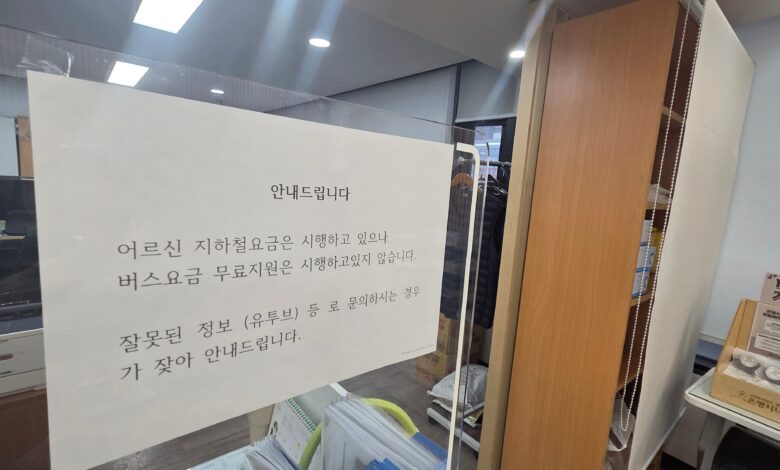
Public officials on the ground are struggling with complaints from citizens deceived by false videos. Kim, 56 years old, an employee at a community center in Eunpyeong-gu, Seoul, said, “More than half of the citizens visiting the center are seniors who came after watching fake YouTube promotional videos. We waste significant time correcting misinformation and explaining the facts.” One community center in Seoul even posted a notice at its entrance: “Free bus fare support is not being implemented. Please be cautious of incorrect information (YouTube, etc.).”
Experts warn that those in their 60s and 70s, who are less familiar with the digital environment, are particularly vulnerable to these AI video ads. Professor Lee Kang-hyeong from Kyungbuk University’s Media Communication Department emphasized the need for local governments nationwide to expand digital literacy education programs targeting the elderly.
The Impact on Society
The spread of AI-generated deepfakes has far-reaching implications. It not only deceives individuals but also erodes trust in public institutions and digital platforms. As these technologies become more accessible, the risk of misuse increases. The elderly, who may not be as tech-savvy, are often the primary targets, making them more susceptible to falling for these scams.
Moreover, the financial and emotional toll on victims can be significant. Many seniors rely on government assistance and may feel pressured to act quickly when they see a video promising financial support. This urgency can lead to hasty decisions and potential losses.


To combat this issue, experts recommend a multi-pronged approach. This includes:
- Enhancing digital literacy among the elderly through targeted educational programs.
- Encouraging social media platforms to implement stricter content moderation policies.
- Increasing public awareness about the dangers of AI-generated deepfakes.
As technology continues to evolve, so too must our strategies for protecting vulnerable populations from its potential harms.
The Need for Vigilance
In an age where information spreads rapidly, it is crucial for individuals to remain vigilant. Verifying information through official channels and cross-checking sources can help prevent falling victim to AI-generated scams. Additionally, reporting suspicious content to the relevant authorities can contribute to a safer digital environment for all.
With the right measures in place, it is possible to mitigate the risks associated with AI deepfakes and protect the most vulnerable members of society.