OpenAI Launches 4O Image Generation: More Realistic

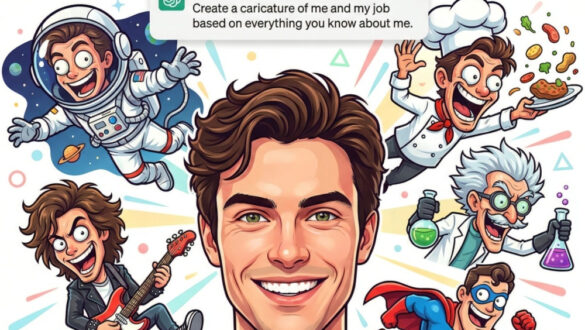
Artificial Intelligence (AI) technology is now increasingly stunning with the ability to create high-quality images from text descriptions. OpenAI, a giant company in the AI field, has just released a new feature called 4o Image Generation which immediately steals the attention in cyberspace. This feature not only produces visually beautiful images, but also has incredible practical uses!
What is 4o Image Generation?
4o Image Generation is the latest feature of OpenAI’s GPT‑4o model. With integrated multimodal technology, GPT‑4O is now able to produce photorealistic images, display text clearly, and respond to the context of the conversation intelligently. This model combines broad world knowledge with deep context understanding, so as to be able to create images according to the detailed instructions of the user.
According to OpenAI, this feature is a breakthrough in making AI-based images. by using the technique Autoregressive transformer and Diffusion Model, 4o Image Generation produces images that are not only aesthetically pleasing, but also very functional for various applications.
Advantages of 4o Image Generation
1. Precision in text and symbol rendering
One of the main advantages of the 4o Image Generation is its ability to produce text and symbols accurately in images. This is very useful for making infographics, diagrams, and other visual elements that require proper text placement.
Example:
Newton’s diagram with the equation “E = mc²” which is written neatly.
infographic with easy-to-read text.

2. Photorealism and Visual Consistency
This technology is able to create images with photorealistic quality. The results are consistent, so that each element in the image remains proportional and in accordance with the desired context.
For example, in one experiment, users can see realistic photo transformations in various styles – from classic looks to animation styles reminiscent of Studio Ghibli films.


3. Qualified multimodal integration
GPT‑4o combines not only text and images, but also sound and video. Although the image feature is currently the main highlight, this multimodal capability opens up opportunities for wider applications in the future, such as interactive content creation and innovative digital media.
How does 4o Image Generation work?
This technology works by combining in-depth understanding of the GPT‑4O model of language and visual context. The work process can be explained simply as follows:
Text input
The user provides a detailed description or command. For example:“Make a picture of two young witches reading the road signs in Williamsburg against the backdrop of a lively city street.”
Context and Detail Analysis
The model will analyze the instructions and look for references from a broad knowledge database, including the images that have been studied.Diffusion and rendering process
through the process Diffusion, the model transforms the textual representation into pixels, creating a photorealistic and detailed image. Technique Autoregressive Ensure that each element of the image is interconnected with the right proportion.image output
The end result is an image that not only fulfills commands, but also has high accuracy in text presentation and other visual details.

4O Image Generation applications in various fields
This innovative feature has tremendous potential to be applied in various sectors, including:
1. Marketing and Advertising
Companies can make promotional materials quickly and efficiently. For example, creating advertising banners or promotional posters with a photorealistic look that attracts the attention of customers.
2. Graphic Design and Infographic
Graphic designers can take advantage of this feature to produce precise and easy-to-understand infographics, diagrams, and illustrations.
Example: infographic about science experiments or restaurant menus with elegant and informative designs.
3. Entertainment and Creative Industry
Movies, games, and digital media can benefit greatly from the ability of AI to produce stunning and innovative visual concepts. This opens up opportunities for storyboarding, character concepts, and impressive cinematic scenes.
4. Education and Training
Learning materials can be made more interactive with educational and informative images. Teachers and trainers can create diagrams, maps, and illustrations that clarify the subject matter.
Controversy and challenges that arise
Although the 4o Image Generation feature has received a positive response, there is a lot of controversy that has arisen, especially related to copyright. Several parties questioned:
Training on copyrighted works:
This AI model is trained to use data from various sources, including copyrighted works. Does this violate the copyrights of the artists?Image quality and ethics:
How to ensure that the resulting image does not offend or disseminate misinformation?
OpenAI itself has added restrictions to prevent the creation of images that explicitly imitate the style of a living artist or certain copyrighted work. Even so, the debate about ethics and legality in the use of AI training data is still ongoing.
Comparison table: GPT‑4O Image Generation vs Dall‑E 3 vs Other Models
| Features | GPT4O Image Generation | DallE 3 | Other models (example: Midjourney) |
|---|---|---|---|
| Photorealistic quality | Very high, precision detail & well rendered text | high, but sometimes lacking detail on the text | well, focus on artistic aesthetics |
| Precision text and symbols | very accurate | enough, there is often distortion in the text | varies, depending on the prompt |
| multimodal capabilities | text, image, audio, (video potential) | limited to images & text | Focus on the image only |
| rendering speed | fast, using autoregressive technology | Pretty fast, but sometimes it takes extra time | tends to be fast but depends on the server |
| Prompt detail control | Very flexible and responsive | good, but need the right prompt | Flexible, but less consistent |
| price and accessibility | Free for limited users, plus with higher limits | paid, with certain packages | varies, depending on the service |
Note: This table is based on observations and comparisons of features of some of the most recent AI Image Generation models.
the impact of 4o image generation on the creative industry
With the presence of the 4o Image Generation, the creative industry has experienced a significant spike in innovation. Here are some of the effects that can be felt:
1. Revolution in digital content production
Content creators can now create illustrations, designs, and promotional photos without having to hire a photographer or graphic designer directly. This of course reduces production costs and processing time.
2. Encouraging innovation in the field of education
Learning materials that were once static can now live with interactive illustrations produced by AI. Teachers and lecturers can easily make visualization of difficult concepts so as to facilitate the learning process.
3. New Business Opportunities
This feature paves the way for new startups that focus on digital content creation, marketing, and AI-based advertising. Small and medium businesses can now compete with large companies through efficient and affordable technology.
4. Transformation in the Entertainment Industry
Games, films, and animations gain added value from the ability to create unique and realistic visual concepts. This can improve the quality of production and speed up the creative process.
Social Response and Viral in the Media
Since its launch, 4O Image Generation has immediately become a hot topic of conversation on social media. Many users share their creations, from Studio Ghibli-style portraits to other unique illustrations. Even the CEO of OpenAI, Sam Altman, is participating in this trend by changing his profile picture using a distinctive anime style!

This viral phenomenon not only shows how sophisticated AI technology is today, but also opens a discussion about the limitations and ethics in the use of copyrighted works of art.
Future Prospects and Advanced Innovation
In the future, the 4o Image Generation is believed to be continuously developed with the addition of new features such as:
Increased interactivity: Users will be able to edit and modify images in real-time through conversational interactions.
Further integration with social media: Automatic content creation is optimized for platforms like Instagram, TikTok, and more.
Applications in Virtual Reality (VR) and Augmented Reality (AR): Digital transformation in the world of entertainment and education that is increasingly immersive.
OpenAI promises to continue to develop this model by adjusting the regulations and ethics of use so that this technology can be utilized optimally without sacrificing the copyright and creativity of artists.
Conclusion
The launch of 4O Image Generation by OpenAI is a big leap in the world of artificial intelligence. With the ability to produce photorealistic images, accurately render text, and integrate various input modalities, this technology offers advanced solutions for various industrial needs – from marketing, education, to entertainment. Although there are still ethical challenges related to copyright, this innovation clearly opens up new opportunities for creators and entrepreneurs to innovate in the production of digital content.
For those of you who are curious about this latest AI technology, the 4o Image Generation is a clear proof that the digital future will be filled with amazing creations that combine visual beauty with practical functionality. This technology not only changes the way we create and consume images, but also opens up a new chapter in the evolution of increasingly interactive and intelligent digital content.