Can You Spot the Fake Faces? Test Your Skills!

The Challenge of Identifying AI-Generated Faces
In a recent study, researchers from the University of New South Wales in Australia have revealed that people are overconfident about their ability to distinguish real faces from those generated by artificial intelligence (AI). This misplaced confidence could make individuals more vulnerable to scams and fraud, as AI-generated faces are becoming increasingly difficult to detect.
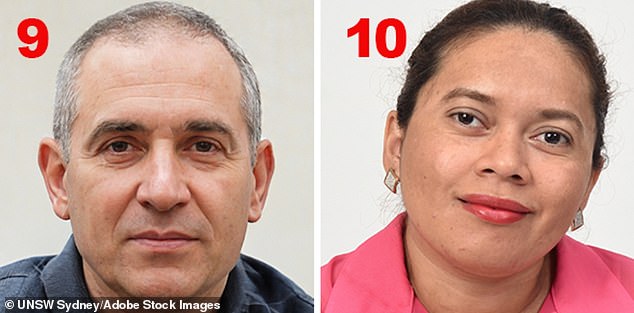
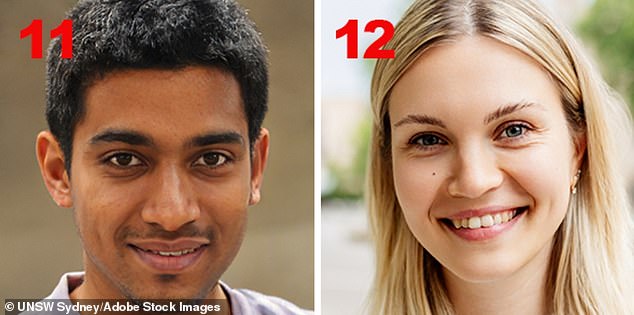
The study highlights how advancements in AI technology have made it nearly impossible for humans to spot the difference between real and fake faces. In the past, identifying fake faces was easier due to obvious visual errors such as distorted teeth, glasses merging into faces, or ears that didn’t properly attach. However, the most advanced AI faces are now so realistic that they are often “too right” rather than “too wrong.”
Dr. Amy Dawel, one of the researchers, explained, “Rather than obvious glitches, they tend to be unusually average – highly symmetrical, well-proportioned, and statistically typical.” This means that the very qualities that make a face attractive or familiar can also signal that it is artificial.
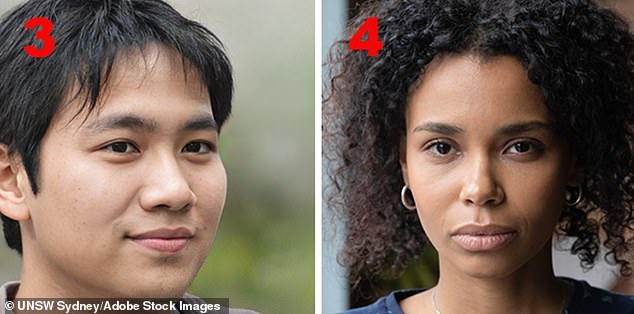
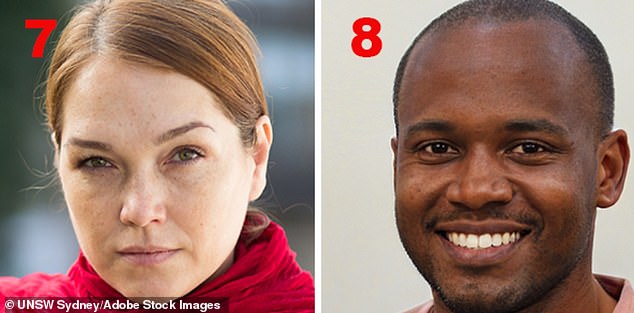
To test this theory, the researchers conducted an online experiment with 125 participants, including 89 normal individuals and 35 super recognisers – people with exceptional face-recognition abilities. Participants were shown pairs of faces and asked to determine which one was real and which was AI-generated.
Results of the Study
The findings showed that even super recognisers struggled to identify AI-generated faces accurately. While they performed slightly better than the general population, the difference was minimal. Both groups showed high levels of confidence in their ability to detect fake faces, despite their actual performance not matching their confidence.
Dr. James Dunn, co-author of the study, noted, “People have been confident of their ability to spot a fake face, but the faces created by the most advanced systems aren’t so easily detectable anymore.” The results suggest that relying on visual judgment alone is no longer reliable, especially in contexts like social media, online dating, or professional networking, where people often assume they can tell when a profile picture looks fake.
How to Spot an AI-Generated Face
According to the researchers, there are certain characteristics that may indicate an AI-generated face:
- Faces that look ‘too right’ – highly symmetrical, well-proportioned, and statistically typical.
- Teeth that are misaligned or have the wrong number in a smile.
- Noses that look wrong or have strange patterns where they meet the face.
- Blurred hairlines or unusual directions at the edges.
- Mismatched or misaligned ears, or non-matching earrings.
- Unnaturally asymmetrical eyes or reflections that don’t line up.
These features are not always obvious, but they can serve as red flags when identifying AI-generated faces.


Implications and Future Research
The study has significant implications for how we perceive and interact with digital identities. As AI technology continues to improve, the gap between what appears plausible and what is real may widen. Recognizing the limits of our own judgment will become increasingly important.
Dr. Dawel emphasized, “As face-generation technology continues to improve, the gap between what looks plausible and what is real may widen – and recognising the limits of our own judgement will become increasingly important.”
Interestingly, even super recognisers were not immune to being fooled by AI-generated faces. While they did perform better on average, the advantage was modest, and their accuracy remained far below what they typically achieve when recognizing real human faces.

There was also substantial overlap between groups, with some non-super recognisers outperforming super recognisers. This suggests that the challenge is not simply a matter of expertise versus everyone else.
The team, who published their findings in the British Journal of Psychology, believes they may have discovered a new kind of face recogniser. Dr. Dunn added, “Our research has revealed that some people are already sleuths at spotting AI-faces, suggesting there may be ‘super-AI-face-detectors’ out there.”
They hope to learn more about how these individuals identify fake faces, what clues they use, and whether these strategies can be taught to others.