Google’s 5 Smart Glasses Features Could Outshine Meta

The smart glasses segment has become increasingly intriguing in recent years. Google first introduced the concept of smart glasses with Google Glass back in 2012, but the project was eventually abandoned after a few years. Other brands such as Meta and Snapchat have also attempted to create smart glasses, but their early versions were often compromised in terms of functionality and design. As a result, these initial efforts did not gain widespread appeal. However, Meta managed to succeed in its second attempt with the Meta Ray-Ban Glasses, which gained popularity worldwide due to their excellent camera quality and AI integration. This success sparked a new wave of smart wearables, with Meta partnering with Oakley for another pair of glasses and launching the second-gen Meta Ray-Bans alongside the new Ray-Ban Display Glasses with a built-in display. Meanwhile, at Google I/O 2026, Google also entered the market with its latest XR glasses announcement.
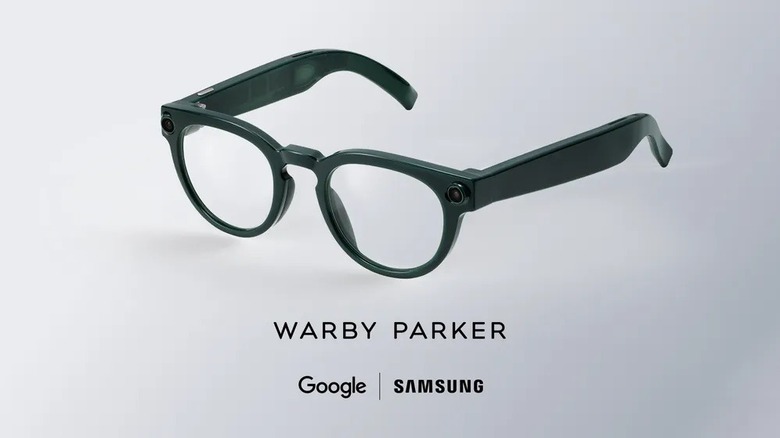
Unlike Meta’s solution, which is primarily targeted at content creators who frequently post on Instagram, Google’s XR glasses are being marketed as having a broader range of features. They are expected to include integrated heads-up displays, improved AI integration, and functionalities that can simplify daily life. Although these products are not yet available, there are hints about what Google’s collaboration with eyewear companies Warby Parker and Gentle Monster could produce. Here’s why we believe Google’s upcoming smart glasses could surpass Meta’s dominance with the Ray-Ban Meta glasses due to features that enhance user experience and provide more value.
Heads-Up Display

The new Meta Ray-Ban Display glasses feature a built-in heads-up display that projects content onto the lenses. When worn, this allows users to view content directly in front of their eyes — a concept that Google originally envisioned with Google Glass over a decade ago. Now, Google is bringing it back with its upcoming smart glasses. A heads-up display unlocks numerous capabilities, such as viewing directions in Google Maps, reading notifications, and even watching content. However, existing solutions with this feature tend to be bulky, making them uncomfortable for extended use. It seems that Google’s version is still at least a year away from release, so we hope the brand works with its partners to make the glasses slimmer and lighter.
Google also experimented with heads-up displays in the original Google Glass, giving it more experience with the technology. It’s reasonable to assume that Google’s smart glasses will have better integration with services that can display content on the screen. For instance, Google Maps should work more seamlessly with the company’s XR glasses compared to Meta’s implementation, as it would be a first-party app continuously updated and maintained by the same company behind the glasses platform. This is similar to how some cool Android features are exclusive to Google Pixel smartphones since Google develops both the hardware and software.
Live Translation with Captions
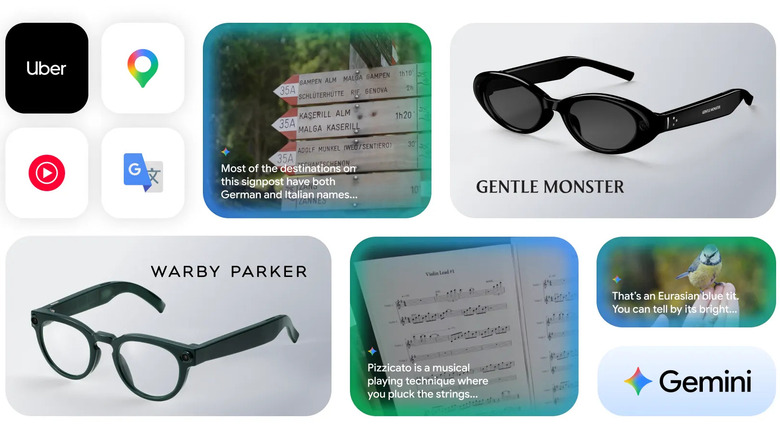
While the Meta Ray-Ban glasses can translate text and speech in real time, the upcoming Google XR Glasses are set to offer an additional feature: live captions in real time alongside audio translations. This means that when engaging in a conversation with someone who speaks a different language, you will not only hear the translated audio in the speaker’s tone but also see their captioned speech right in front of your eyes. This is especially beneficial for individuals who are deaf or hard of hearing, or for those in public spaces where hearing others may be challenging.
In addition to real-time translation during conversations, Google’s glasses can also translate signboards and restaurant menus. Given that Google Translate is a well-established translation service with decades of development, it’s logical to expect that Google’s version will perform better. Google already provides live captions when watching YouTube videos and for any audio output from a smartphone, including speech and phone calls. Considering the company’s extensive experience in this area, Google’s upcoming glasses are expected to handle translations more effectively.


Better Ecosystem Integration
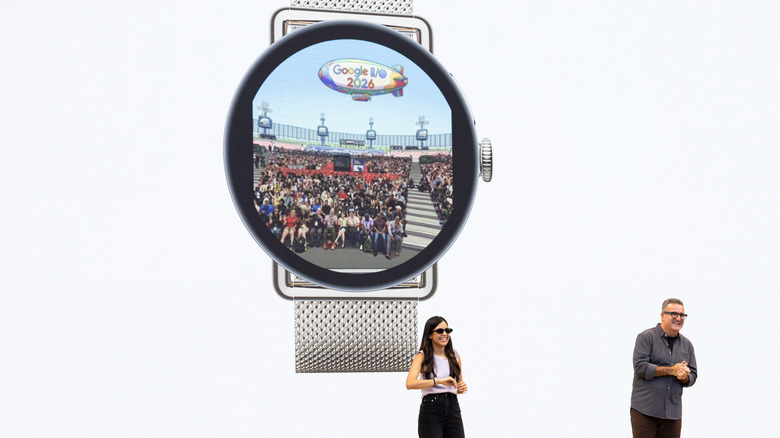
Unlike Meta’s hardware experience, which is primarily limited to XR devices like the Ray-Bans and the Meta Quest line of VR headsets, Google has a comprehensive portfolio of smart devices. This includes phones, watches, tablets, and even smart home technology like the Nest ecosystem. As a result, the integration of Google XR Glasses with other smart devices is expected to be far superior to that of Meta’s Ray-Ban glasses.
Currently, the Meta glasses can connect to your smartphone via a proprietary app that allows you to answer calls, listen to music, receive and reply to messages, and sync photos and videos captured via the glasses to your smartphone. In contrast, while the Google XR Glasses can work with both Android and iOS smartphones, they are expected to integrate seamlessly with other Android devices.
For example, if you take a photo using the smart glasses, Google says you can instantly view it on your smartphone to check if it looks good. You can also edit the image using Gemini’s Nano Banana feature through voice commands. Similarly, you can ask Gemini to perform tasks such as making calls, sending messages, and typing emails. The key advantage here is that many people already use Gemini regularly, so the AI assistant has a deeper understanding of its users compared to Meta AI, which is used only when wearing the Ray-Ban glasses. Gemini can also perform actions within apps, allowing you to call an Uber, play your favorite playlist, and carry out other tasks directly from your glasses. These are the types of features that make smart glasses truly useful.
Powerful AI Features with Gemini Integration
As mentioned earlier, the biggest advantage of using Gemini over other AI assistants is that it is integrated directly into Android. It has access to details such as your search history, music preferences, interests, and message-reply styles. This gives the chatbot more context about your queries compared to Meta AI or any third-party service. Gemini can even access your emails and conversations to retrieve information about you. For instance, you can ask it questions about your upcoming flights or events, and it will sift through your data to provide all the necessary information.
Additionally, Gemini can summarize incoming messages and provide turn-by-turn navigation instructions when driving or walking. It can also help you find locations such as nearby restaurants, cafes, or charging stations for electric vehicles. While the Meta Ray-Bans can perform some of these functions, Google’s services tend to be more effective, as apps like Google Maps and Google Messages are first-party and have been actively developed for decades. The main benefit of these tasks is that, when combined with the Google XR Glasses, you won’t need to constantly reach for your phone. You can simply use your voice, which can also help reduce screen time.
(Hopefully) Better Privacy
With the increasing number of smart glasses being introduced, such as the Snapchat Specs and the upcoming Google XR Glasses, privacy is a major concern that needs to be addressed. Recently, there were reports that Meta employees had access to photos and videos taken by Meta Ray-Ban users, which was a significant breach of privacy. Users hadn’t consented to their clips being shared for manual review, making it a serious red flag for privacy-conscious individuals. These accessories are often worn throughout the day, so there are valid reasons to avoid wearing the Meta Ray-Ban glasses in certain places if privacy is a concern. It’s not surprising, considering Meta’s already poor reputation regarding privacy.
Although Google is not without its own issues regarding data harvesting, it has arguably maintained a better reputation than Meta. This makes us hopeful that Google will handle user privacy more responsibly. Notably, Meta added a blinking LED to the front of the glasses to indicate when recording starts, and Google and Samsung are expected to adopt a similar approach. It’s also likely that the privacy policy for the glasses will align with that of Gemini. We can also expect to see fraud detection for AI integrated into Google’s glasses, which would be a promising safety feature supporting more secure privacy.