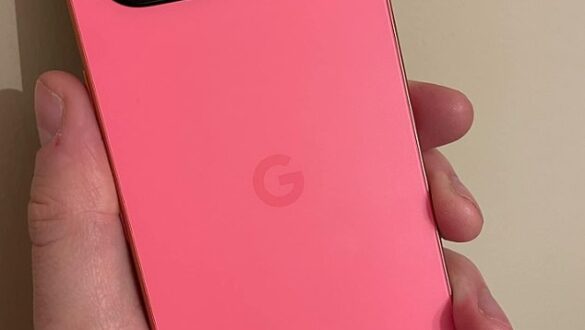
iPhone 17 Air comes without a USB-C port and looks slim

Apple again surprised the smartphone market by designing the iPhone 17 Air as the thinnest phone in its product series. In an effort to redefine the design and charging experience, the latest device is rumored to be released without a charging hole or a USB-C port. A revolutionary move that marked a paradigm shift in the smartphone industry.
According to a report by senior technology journalist Mark Gurman, who shared the news via Mac Rumors on Sunday (16/3), Apple has designed the iPhone 17 Air as a model pioneer without a charging port. This innovation is expected to be an indicator of a slimmer and minimalist design trend in Apple’s product line. Executives at Apple even revealed that if this concept is successfully accepted by the market, the company will adopt a similar approach to subsequent iPhone models.
Revolutionary design and new technological approach
In an effort to optimize the look and functionality, the iPhone 17 Air not only offers a very thin design, but also introduces a new way of charging wirelessly. The absence of a physical charging port implies that Apple will rely on MagSafe technology for wireless charging. This feature is expected to reduce dependence on traditional ports that have been the standard, while providing a cleaner and modern aesthetic.
iPhone 17 Air Feature Comparison Table
| Features | iPhone 17 Air | Previous models (eg iPhone 16E) |
|---|---|---|
| Thickness | thinnest in Apple’s product line | thicker |
| Charging port | No physical port (support only MagSafe) | Using a USB-C or Lightning port |
| Charging technology | Wireless with Magsafe | conventional cable |
| Design | Minimalist, no charging holes | Conventional design with holes |
This innovative approach marks a significant shift after Apple over the past few years has made a transition from the Lightning port to USB-C on most of its devices. Although the company previously adopted a universal USB-C port, Apple has now chosen to completely remove the charging holes in certain models, a move that has been projected by supply chain analysts such as Ming-Chi Kuo since 2021, although at the time it has not been realized.
Implications and potential impacts on the market
Apple’s bold move not only aroused the attention of technology enthusiasts, but also led to speculation about the future of charging on smartphones. By eliminating physical ports, Apple opens up opportunities for more efficient and fast wireless charging technology. On the other hand, this strategy poses new challenges, especially for consumers who have been relying on physical ports for various accessories and data transfer purposes.
In a market that increasingly prioritizes sleek and ergonomic design, the iPhone 17 Air is expected to be able to meet the expectations of modern consumers. Smartphone users are now increasingly looking for devices that are not only strong in performance, but also visually and practically attractive for everyday use. If the iPhone 17 Air manages to balance these two aspects, it is likely that this product will trigger a new trend in the mobile technology industry.
industry challenges and expectations
Some industry analysts say that the success of the iPhone 17 Air will pave the way for mobile phones without physical ports in the future. Meanwhile, several parties also voiced concerns regarding the durability and efficiency of wireless charging. Apple, known for its reputation for innovation and quality, is believed to have conducted in-depth research so that the MagSafe technology used can meet charging standards equivalent to conventional methods.


Meanwhile, this transition also has an impact on the accessory ecosystem. Accessories manufacturers who have been relying on physical ports must immediately adapt to the wireless charging system, so that this technological innovation affects not only mobile phones, but also the entire supply chain and accessories market. This is expected to encourage new standardization in the mobile device industry.
Future Prospects and Predictions
Although the wait for the iPhone without the charging port has been going on for a long time, the presence of the iPhone 17 Air marks a significant turning point. The success of this concept will not only affect future iPhone models, but can also be a benchmark for other smartphone manufacturers to adopt similar technologies. In the midst of increasingly fierce competition, innovations like this are an important strategy to maintain competitiveness in the global market.
Market analysts consider that this breakthrough has the potential to increase the selling value and exclusivity of Apple products. By eliminating physical ports, Apple not only succeeded in creating a more elegant design, but also opened up opportunities to develop more sophisticated wireless charging technology. This is in line with the growing trend of digitalization and miniaturization of electronic components.
In the context of global competition, this step can provide a strategic advantage for Apple, especially in the premium market where design and innovation are the main factors. Users who want lean and efficient devices are predicted to welcome this innovation, while competitors are required to re-evaluate their design approach.
Conclusion
The iPhone 17 Air without a charging port is a symbol of a major change in the smartphone industry. Apple, through this innovation, affirmed its commitment to continue to innovate and create products that not only meet functional needs, but also offer a more modern and minimalist design aesthetic. With the support of wireless charging technology through MagSafe, this product is expected to open a new era in the smartphone usage experience. The success of the iPhone 17 Air will greatly determine whether the trend of mobile phones without physical ports will be widely adopted by the technology industry in the future.
With all the challenges and prospects, the iPhone 17 Air is ready to make a new history in the world of gadgets. Consumers and industry observers are now looking forward to the official launch of this product, which is predicted to bring fresh air in the premium smartphone segment and encourage further innovation in the years to come.