4 Important Differences between Exynos and Snapdragon Chipsets on Samsung Cellphones

Understanding the Differences between Exynos and Snapdragon Chipsets on Samsung Cellphones
Choosing a Samsung cellphone is not only about design or camera, but also about internal performance, especially the chipset used. The two types of chipsets often found on Samsung devices are Exynos and Snapdragon. Both processors have their own advantages and disadvantages, so it is important to understand the differences before purchasing.
1. Chipset Origin and Developer
Exynos is a chipset developed directly by Samsung Semiconductor, part of Samsung Electronics. This means that Exynos is a domestic product specifically designed to support the Samsung ecosystem. With its own development, Samsung has greater control over the integration between hardware and software on its devices. The advantage of Exynos is its deep integration with Samsung systems, so it can be customized according to device needs. However, application optimization is sometimes not optimal, especially for certain games.
Meanwhile, Snapdragon is a chipset developed by Qualcomm, a company from the United States. This chipset is not only used by Samsung, but also by other brands such as Xiaomi, Oppo and OnePlus. Due to its wide use, Snapdragon often gets better optimization from application and game developers. Its main advantages are extensive support from developers and a global reputation for mobile performance. However, because they are not developed specifically for one brand, their optimizations tend to be more general.
2. Daily Performance and Gaming
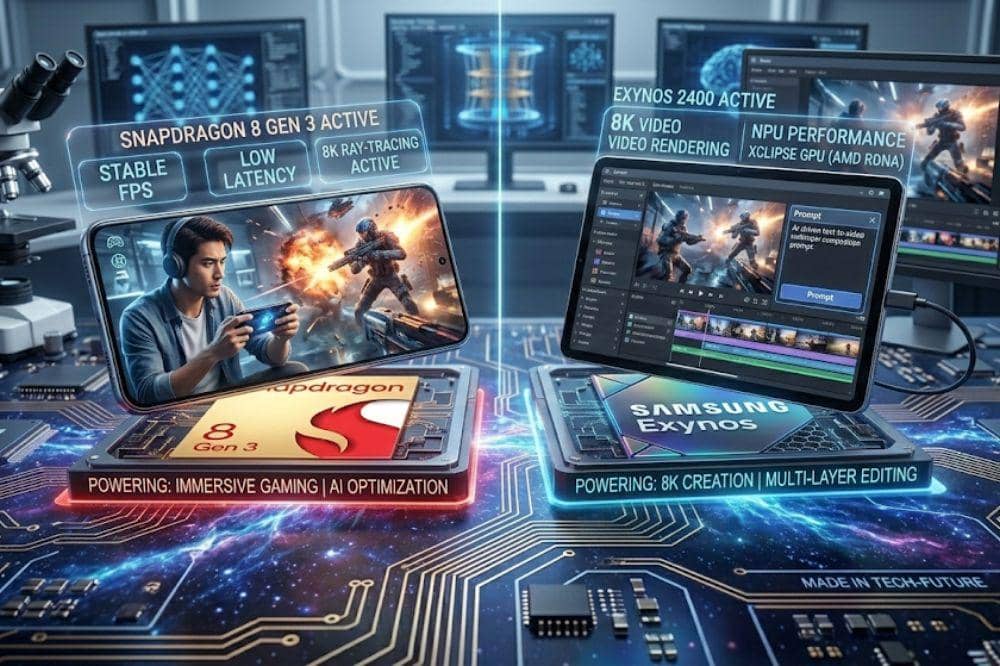
In daily use such as browsing, social media and streaming, both Exynos and Snapdragon are very capable, especially in the upper middle class. However, the difference begins to be felt when used for heavy activities such as gaming or video editing.
In previous generations, Snapdragon variants in series such as the Samsung Galaxy S23 were known to have more stable graphics performance than Exynos in the previous series. Frame rates tend to be more consistent and device temperature more controlled when gaming for long periods. Snapdragon’s advantages lie in a more stable GPU for heavy games and consistent frame rates in the long term.
Meanwhile, Exynos is strong enough for daily needs and multitasking. In the latest generation, performance has improved a lot and is starting to match Snapdragon. However, on some models, power consumption can be high when performance is pushed to maximum.
3. Power Efficiency and Temperature
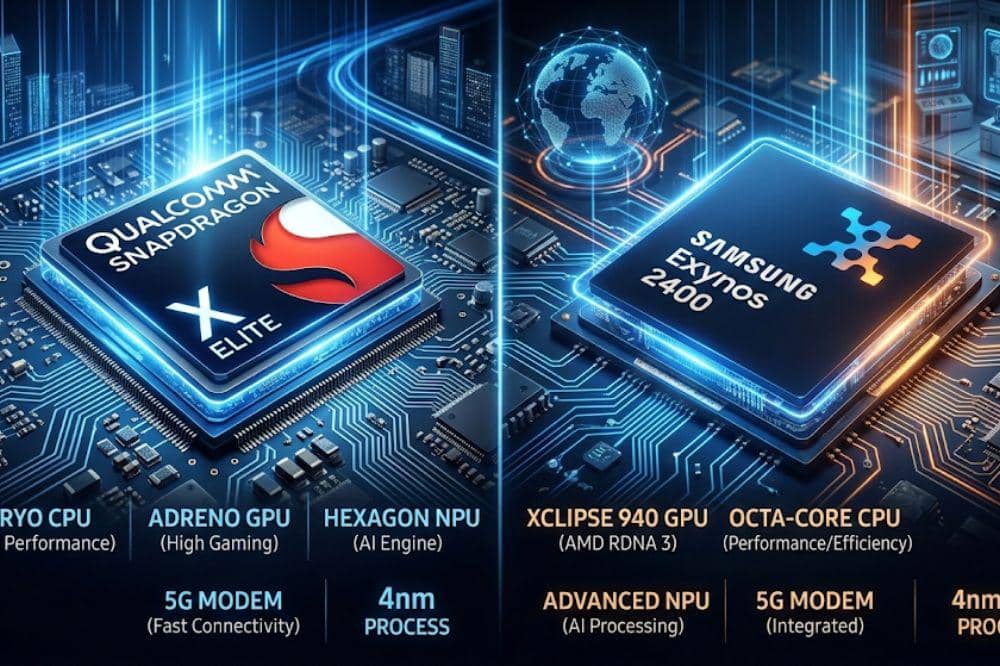
Power efficiency is an important factor, especially for users who are active all day without wanting to charge frequently. Here, there is a debate between Exynos and Snapdragon users. Several previous generations of Exynos were known to heat up faster when used for heavy gaming or intensive use. Meanwhile, Snapdragon tends to be more stable in maintaining temperatures, especially in the flagship series.
However, power efficiency is also greatly influenced by the cooling system, battery capacity and software optimization from Samsung. So, it’s not solely because of the type of chipset. Stable temperature management and the ability to maintain high performance for longer make Snapdragon superior.


However, the latest generation of Exynos has increased its efficiency and is suitable for normal to medium use. The problem is that the history of overheating issues in previous generations makes some users still doubtful. Meanwhile, the disadvantage of Snapdragon is that the price of the device is usually higher.
4. Price and Availability in the Market

Samsung often customizes chipsets based on distribution regions. Some countries get Snapdragon variants, while others get Exynos. This also affects selling prices in the market. The Snapdragon variant is generally more popular with technology fans and gamers, so the resale value is sometimes higher.
However, for general use, many users do not feel a significant difference. Snapdragon is more popular among tech enthusiasts and resale values tend to be more stable. Meanwhile, Exynos is usually easier to find on the official Indonesian market and is quite optimal for the needs of the majority of users.
Conclusion
If Mom or Dad is looking for a cellphone for heavy gaming, maximum graphics performance and long-term stability, the Snapdragon variant is often superior. However, if your use is more towards social media, work, video calls and content consumption, Exynos is very adequate and no less comfortable to use.
Most importantly, don’t just focus on the chipset name. Also pay attention to RAM, storage, cooling system, and software optimization in each model. That way, Mama and Papa can choose a Samsung cellphone that really suits their needs, not just following trends.