Lidar, a sophisticated technology that actually began to be buried before worldwide
Autonomous technology and the role of LiDAR
Autonomous technology is now an important part of the global automotive industry. Various manufacturers, both from the United States, Europe and China, continue to develop innovations to accelerate the development of driverless cars. One of the technologies that had become a mainstay was LiDAR (Light Detection and Ranging), which uses laser light pulses to measure distances and creates three-dimensional (3D) maps with high accuracy.
However, along with the development of other technologies, this device began to be abandoned by several well-known car manufacturers. Tesla and Xpeng, for example, have decided to no longer use LiDAR in their autonomous systems. Even Volvo also took similar steps. This shows that the trend of LiDAR usage is starting to change.
Tesla and Xpeng approaches
Elon Musk, CEO of Tesla, expressly rejects the use of LiDAR in Tesla’s autonomous system. He prefers an approach called “Tesla Vision”, which only relies on cameras and artificial intelligence (AI) support. According to Musk, this concept is similar to the way humans drive, namely through eye vision.
Meanwhile, Xpeng, a manufacturer from China, also chose not to use LiDAR. They are more focused on high-resolution camera systems known as Pure Vision. Xpeng’s Vice President, James Wu, explained that this system maximizes the camera around the car to detect the environment, combined with AI.
The latest version of Pure Vision uses four AI Turing chips with a speed of 3,000 tera operations per second (top). This chip is able to process real time images quickly, so that it can generate data for autonomous system functions known as voice, language, action (VLA).
The reason Lidar is starting to lose interest
Although LiDAR is considered an advanced technology, there are several drawbacks that make it even more abandoned. First, the cost of production of LiDAR is very high, which has an impact on the selling price of the vehicle. Second, the development of cameras, especially modern stereo camera systems, has been able to outperform LiDAR in many conditions. Third, LIDAR is prone to bad weather such as heavy rain or thick fog, which causes the laser beam to decrease drastically. Fourth, the supply of LiDAR depends on the particular supplier, making it vulnerable to supply chain disruptions.
Use of Lidar in Indonesia
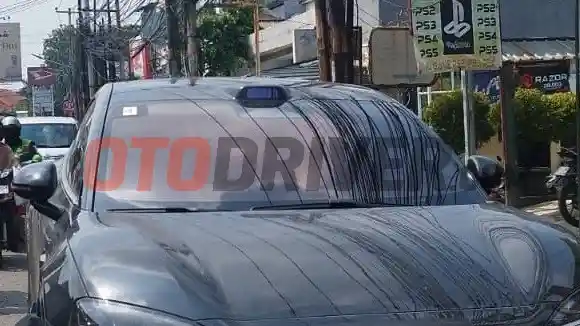
In Indonesia, the presence of LiDAR-equipped cars is starting to be seen. Lidar car usually has a characteristic in the form of a bulge on the roof. One example is the Luxeed R7, which was recently seen in the photo. However, it is not certain whether this car is actually equipped with LIDAR.
Zeng Shou, President Director of Chery Group Indonesia, said that his party was testing the Luxeed R7 unit to adjust to Indonesian road conditions. However, he could not confirm whether this car will be equipped with Lidar when it is officially released.


“I can’t talk at this time about this car (Luxeed R7), as well as the technology it will bring,” said Zeng. “For the use of Lidar, I have to check the data again,” he added.