
lack of motor abs brake

Safety features are the choice, but also have drawbacks
The ABS (Anti-Lock Braking System) brake system is now increasingly common in modern motorcycles in Indonesia. This system is designed to prevent the wheels from locking during sudden braking, so that the motor remains stable and the rider can still control the direction of the vehicle’s speed. Many people consider ABS as a mandatory safety feature, especially for users who often drive in heavy traffic or high speed.
Even so, that does not mean this system is without shortcomings. Drivers still need to understand the limits before deciding to buy a motorcycle with ABS feature. By knowing the less ideal side, users can consider the needs, driving style, and road conditions that are often traversed.
1. The cost of ownership and care is higher
One of the main drawbacks of ABS is the price of the motorbike which is more expensive than the non-ABS version. The price difference can reach millions of rupiah due to sensor technology, control modules, and more complex additional components. For consumers who are looking for an affordable motorbike, this can be a big consideration.
In addition, the cost of maintenance and repair of ABS tends to be higher. If the ABS module or sensor is damaged, the component cannot be repaired simply and generally has to be replaced. Maintenance of the braking system also requires more experienced mechanics, so that the service fee can also increase.
2. Possibility of less ideal response on certain surfaces

Although very helpful on dry paved roads, ABS does not always give the best results on certain surfaces such as sand, gravel, wet soil, muddy roads, or bumpy roads. In this condition, some riders actually feel the braking becomes a little longer because ABS prevents the wheels from locking.
On off-road or trail bikes, some riders prefer conventional brakes because they can control tire slips according to the needs of the field. This makes ABS less ideal for motorists who often roam damaged roads or extreme terrain. In fact, some adventure motorcycles provide the option of turning off ABS when off-road so that braking is more in line with the character of the ground.
3. Excessive sense of security and unwise driving style
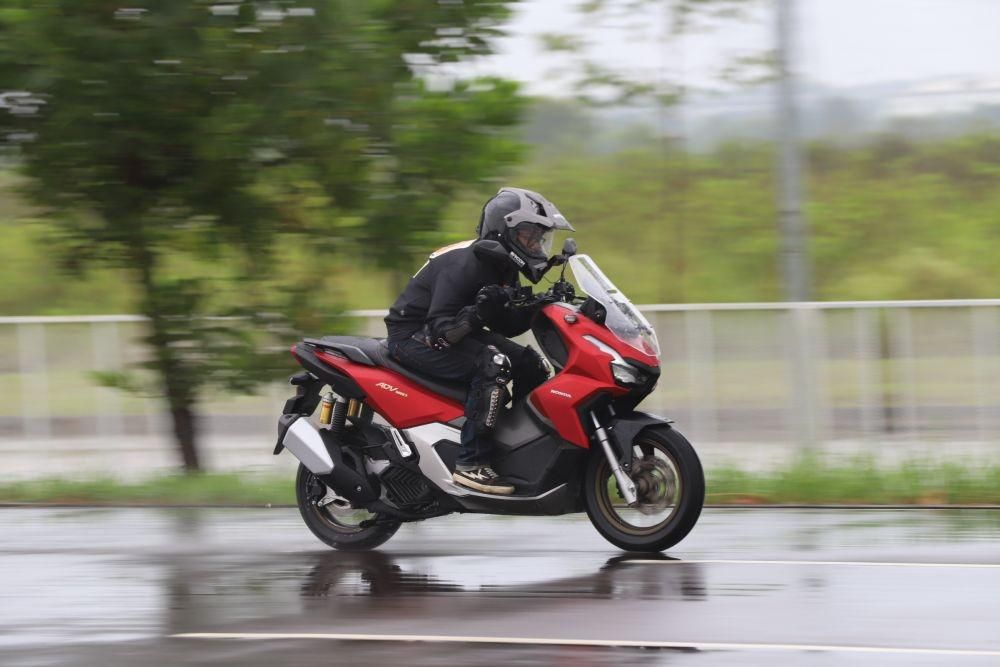
The ABS feature often makes drivers feel safer, but excessive self-confidence can also be a weakness in itself. Many novice riders think ABS is able to stop the motor faster in any situation, even though this system only keeps the wheels turning so that the motor does not lose control—not shortens the braking distance automatically. If the rider does not keep the speed, safe distance, and tire condition, ABS will not fully help. In addition, ABS brakes still require the correct braking technique, including adjusting brake pressure and reading the road situation. Safety remains dependent on driving behavior, not just features.
Ultimately, ABS is a very useful safety feature, but it is not a perfect solution for all conditions. Drivers still need to understand their limitations, adjust their driving style, and consider the daily use environment before making a choice. That way, the decision to buy an ABS motorbike can be more in line with needs and expectations.


Honda ADV160 vs Aprilia SR-GT 200: Which is the most comfortable for touring?


