Which 4 New Personality Types Fit You?

There is a high possibility that you have told a friend that you love reading because you are an introvert, or apologised for being late because you are a Type B. However, scientists from the UK and Germany have introduced four new personality types for individuals to fit into based on how they use AI chatbots.
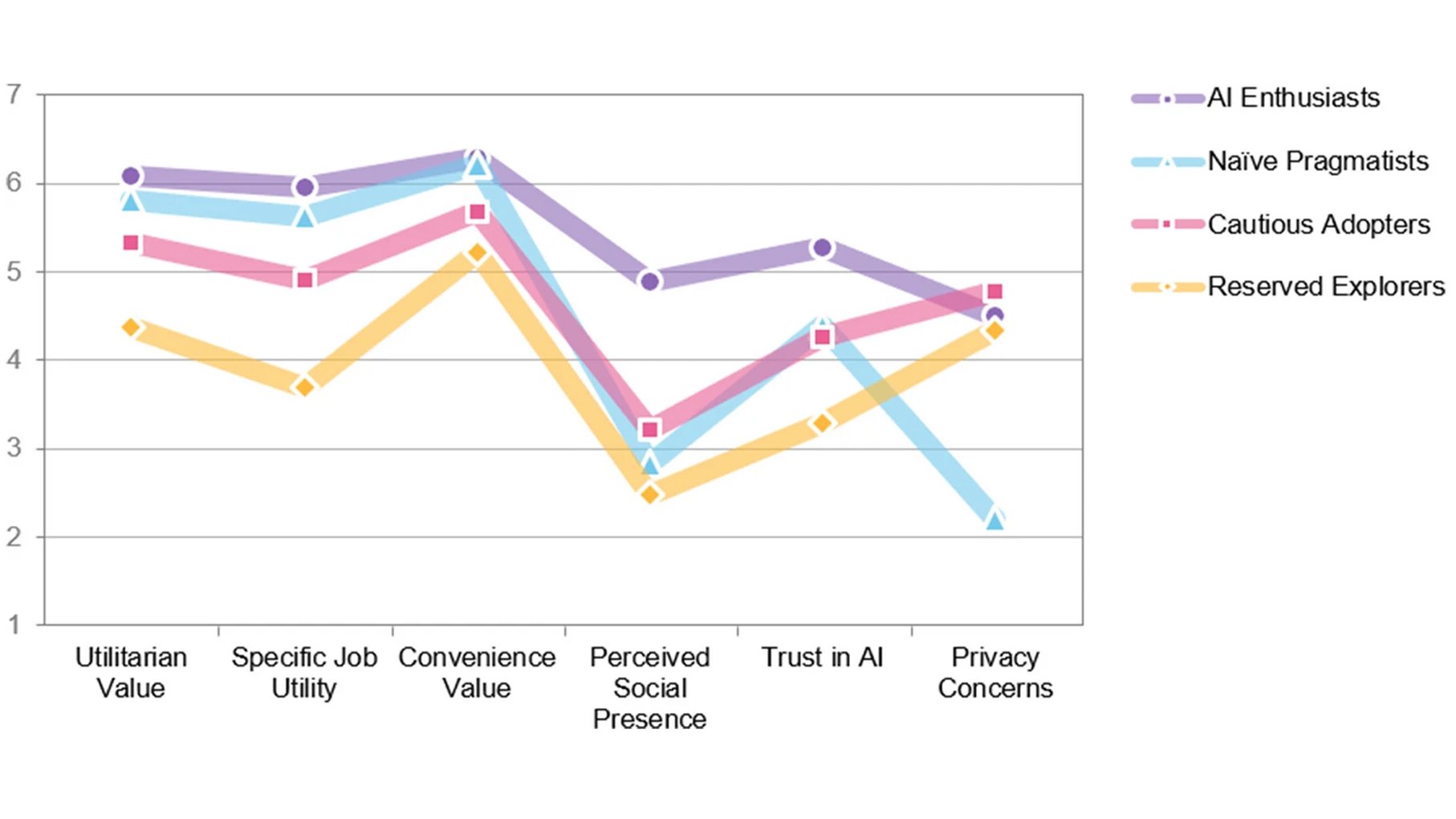
A recent study, published in The International Journal on Networked Business, identified four distinct categories of ChatGPT users through a survey involving 344 participants. Each person, whether they lazily ask ChatGPT to write an email or experts using it to chat with dolphins, falls into at least one of these four categories.
The Four Personality Types of ChatGPT Users
Tech-Savvy AI Enthusiast
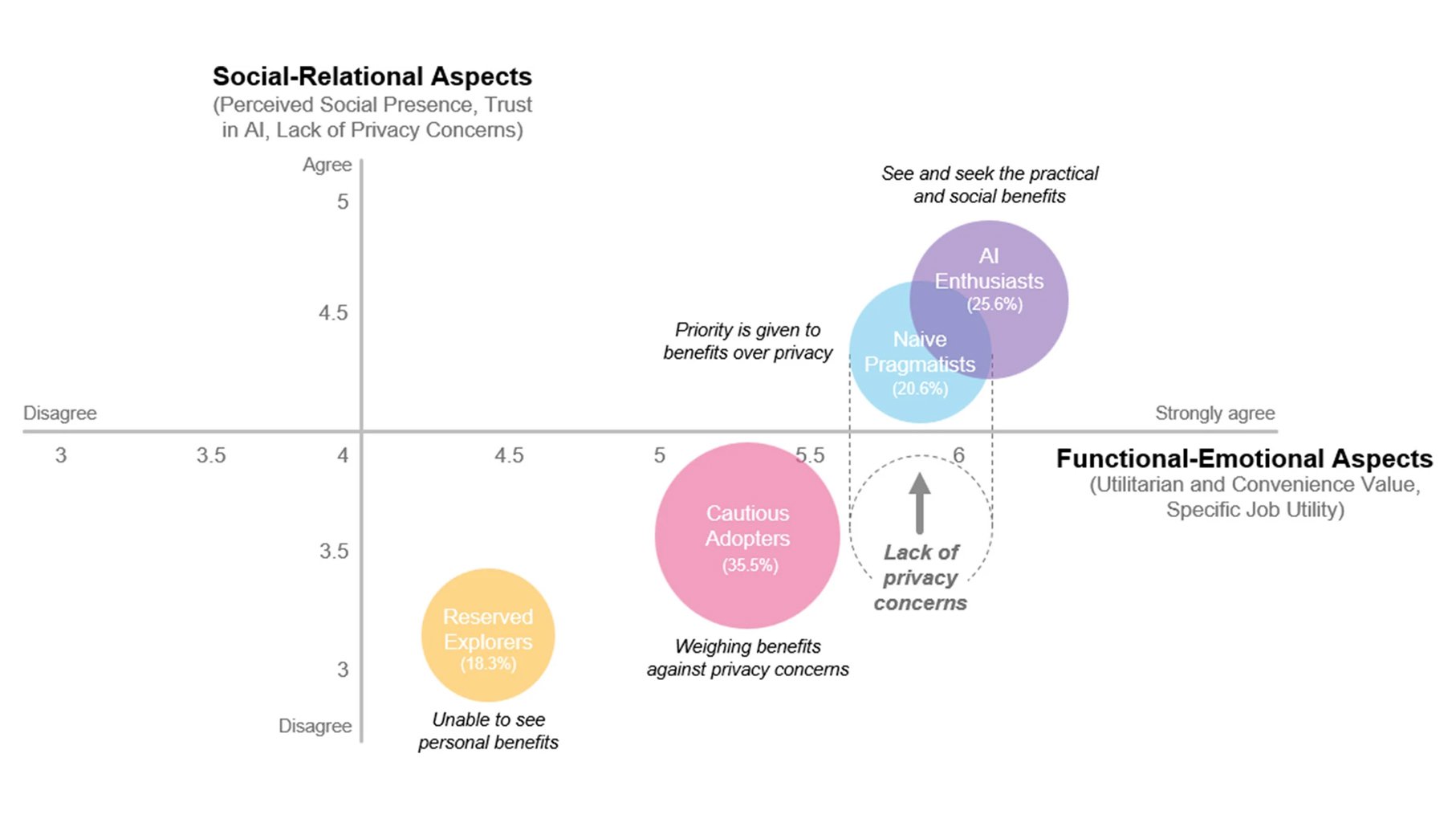
This group makes up 25.6% of the participants. These individuals quickly embraced ChatGPT, even though it had only been around for about four months when the survey was conducted in 2020. According to study author Christoph Gerling, this could be a marketing executive who treats ChatGPT as a senior peer, engaging in deep, multi-turn dialogues to refine global campaign strategies and valuing the “AI’s judgment.” AI enthusiasts might also be show-offs, using AI to maintain their reputation in the office as an “innovation leader.”Naïve Pragmatists
This category constitutes 20.6% of those surveyed. These users are solution hunters who focus on getting things done, both online and offline, without much concern for how the results are achieved. For example, a young professional might use ChatGPT as a Swiss Army knife for mundane tasks such as recipe suggestions or gift ideas, rarely questioning the sources or limitations of the information provided.Cautious Adopters
This is the largest group, making up 35.5% of participants. Researchers describe them as individuals who try to balance the pros and cons in life, including when it comes to adopting new technologies like AI. A small business owner might experiment with ChatGPT for drafting customer communications but only adopt it after observing the success of peers.Reserved Explorers
This group is the smallest, comprising just 18.3% of the participants. These users are the most apprehensive about AI. They want to understand the hype around virtual assistants but are worried about data and privacy. An example could be a tech-sceptical older adult who tries ChatGPT to see if it can explain a complex news topic, finds the result acceptable, but does not perceive it as a significant improvement over a traditional search engine.
The findings of the study are less about the actual personalities of ChatGPT users and more about what initially drew them to create an account. As Gerling explains, if you do use AI chatbots, you likely fall somewhere between these four personality types.


This includes his co-author, Oxford AI lecturer Dr Fabian Braesemann, who says he is between an AI Enthusiast and a Naïve Pragmatist. Dr Braesemann notes that he focuses on optimising prompts based on the structure of human thinking, having completely weaned himself off social pleasantries that he would normally use when addressing people. He also lacks the loyalty typical of an Enthusiast, switching tools when a cheaper or more powerful alternative becomes available. Essentially, your personality—specifically your need for control versus your curiosity—determines whether you embrace the tool or keep it at arm’s length.
How Has AI Changed Over the Last Few Years?
Over the past six years since the survey, AI has evolved significantly. It is now capable of booking flights on your behalf or generating lifelike images. While general-purpose chatbots are still essentially sophisticated next-word calculators, many users have developed an emotional relationship with them. LidahTekno has heard from children who consider AI as a friend, teens who treat them like therapists, and adults who rely on them like doctors. There are even AI companionship apps, which are personalised chatbots that simulate partners, celebrities, or fictional characters.
However, Braesemann states that most people still view AI tools as just that—tools. Nothing more, nothing less. “Findings show that while simple chat interfaces draw people in, the real value comes from the personal satisfaction of mastering ‘prompts’ to achieve the best results,” he adds. “An individual’s personal motivation now determines the tool’s usefulness more than ever.”
Final Thoughts
The study highlights how different personality traits influence how individuals interact with AI. Whether you are an enthusiastic tech user, a pragmatic problem solver, a cautious adopter, or a reserved explorer, your approach to AI reflects your unique perspective and needs. As AI continues to evolve, understanding these personality types can help users make better decisions about how they engage with these powerful tools.