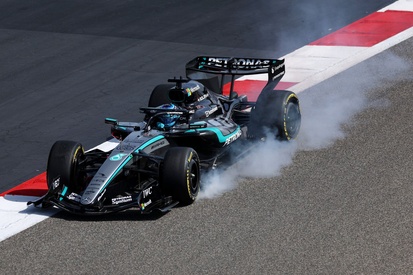
Ferrari’s F1 2026 Rear Wing Echoes 2011 Mercedes Design

Ferrari’s Innovative Approach to the Rear Wing Design
Ferrari has made a significant impact on the Formula 1 paddock with its imaginative designs during pre-season testing. The team introduced several new features that have caught the attention of fans and experts alike.
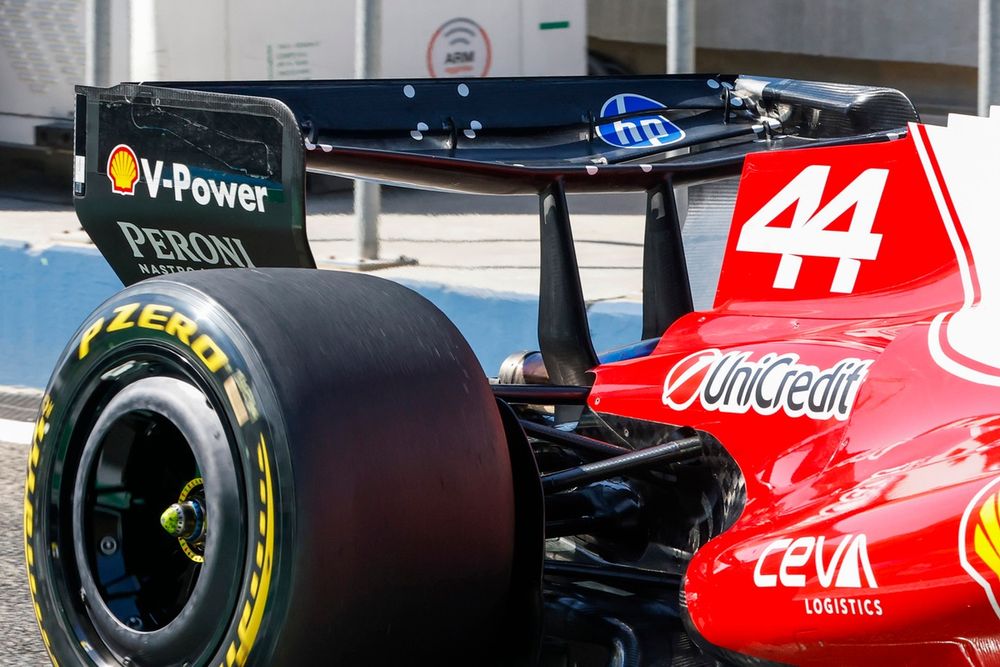
One of the standout innovations is the rear wing with an innovative opening mechanism that flips 180 degrees. This feature, combined with a new design behind the exhaust, showcases the team’s commitment to pushing the boundaries of what is possible within the new regulations for 2026.
Redesigning the Control System
Beyond the rear wing, there are other equally interesting aspects to explore with the SF-26. The entire control system that allows the wing to move has been completely redesigned. To achieve a 180-degree rotation, Ferrari’s engineers had to develop a different actuator. Previously, the central actuator located on the mainplane limited movement due to physical space constraints.
To address this, the engineers integrated the actuator directly into the endplate. This is an extremely sophisticated design that must withstand very high loads. Generally, rear actuators are bulky, leading some teams to redesign the central section of the last element to mask any losses due to the control.
This approach is reminiscent of Mercedes in 2011 when they introduced an actuator located in the endplates. This was controversial at the time as it led to the German marque’s eventually banned double DRS. However, Ferrari did not base their rotating rear wing on this concept. Still, it is interesting to see how certain ideas from the past can re-emerge in new forms.

Enhanced Performance and Reliability
The basic concept of the SF-26’s control system is different from previous iterations. It must guarantee a 180-degree rotation and work with significantly higher loads, not only because of higher top speeds but also because the flaps are much larger. On some tracks, the system will be activated up to four times per lap, making reliability a critical issue.


All these factors put a miniaturized control system inside the endplate to the test. According to regulations, it must still guarantee a safety mechanism capable of returning the movable flaps to the closed position in the event of a malfunction.
Structural Changes and Regulatory Considerations
In addition to moving the actuator, Ferrari made other interventions to create the new wing. The pivot on which the wing rotates has been moved more towards the center, at the point where it connects to the actuator. The end of the first element has also been enlarged to accommodate this new geometry.
At the regulatory level, there was discussion about whether this wing could exceed the maximum permitted volume, especially during rotation when it becomes almost vertical. However, the regulations, which allow teams to reduce drag on straights and limit energy consumption, have opened up new design possibilities. The FIA has given legal approval to Ferrari’s solution.
Even today, the wing must remain within the regulatory box when closed, but when opened, the regulations provide for some exceptions. The key point is that the wing no longer has to remain entirely within the regulatory box during movement, ensuring greater freedom of rotation.

Additional Insights and Discussions
Formula 1 continues to evolve, and with each new season, teams push the limits of innovation. The recent discussions in the F1 Commission meeting highlighted concerns regarding the straight mode. Additionally, the analysis of the F1 engine vote raised questions about fairness after Mercedes kept the FIA “in the loop.”