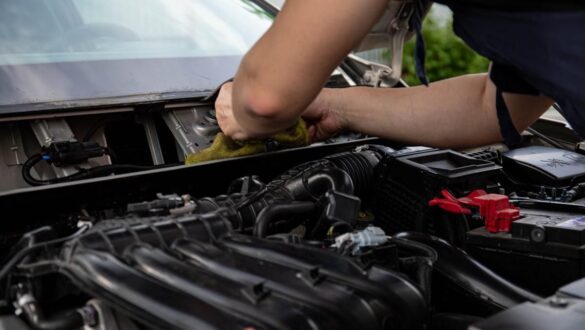
steps to change car oil and why should it be replaced

In this Lidahtekno article, we will explain the steps to change car oil and why it should be replaced even if your car or vehicle is very rarely used.
Why should car oil be changed even though it is rarely used?
Cars that are rarely used do not mean safe from damage, especially if there is no regular maintenance. One important aspect of car maintenance is changing the oil regularly. Here are the reasons why oil changes remain important, even though the vehicle is rarely used:
- Formation of oil sludge or oil sludge
When the oil is in the car engine for a long time without being used, the oil can be oxidized, especially in mineral-based oils. This oxidation causes the oil to lose viscosity and the ability to lubricate the engine properly. As a result, there is a buildup of dirt and small particles that become oil sludge or Oil sludge. - risk of damage to machine components
Oil sludge can accumulate at the bottom of the engine, block the flow of clean oil, and even damage the components in the engine. This condition requires a fairly expensive repair process, such as Overhaul or down the machine, where the entire machine is dismantled and cleaned. - ensure optimal performance
Fresh oil helps keep engine performance optimal, even though the car is rarely used. By changing the oil regularly, the quality of the oil is maintained, and the risk of damage due to oil sludge can be minimized.
Steps to Change Car Oil Correctly
Car oil changes do not always have to be done in the workshop. Some car owners prefer to do it themselves by following the right procedures. Here are the steps to change the car oil that you can follow:
1. Prepare the equipment and oil needed
To perform an oil change, here are the equipment that must be prepared:
- new oil according to car specifications
- New oil filter
- wrench (usually size 14 or 17 mm)
- Used oil container
- rag
- Car jack (if needed to access under the car)
2. Heat the engine briefly
Before changing the oil, heat the car engine for 3-5 minutes. Warm oil is easier to flow out of the engine so that the draining process becomes more effective.
3. Lift the car using a jack (optional)
If the oil drain hole is difficult to reach, lift the front of the car using a jack and make sure the car is safe and stable before you start working underneath.
4. Remove the old oil from the engine
- Find the oil drain bolt at the bottom of the engine, usually near the oil tub.
- Use a wrench to unscrew the bolt and allow the oil to drain into the container.
- Make sure all the oil is drained completely before re-screwing the bolt.
5. Change the oil filter
A new oil filter is also very important to keep the oil clean. Here’s how:
- Remove the old oil filter with an oil or hand filter opener (if possible).
- Install the new oil filter by checking the direction of the installation, and make sure you lubricate the rubber seal at the end of the filter with a little new oil to make it easier to install.
6. Fill the new oil into the engine
- After the drain bolt and oil filter are installed, fill the new oil through the oil filling hole at the top of the engine.
- Use a funnel so that the oil does not spill and dirty the engine.
- Make sure you fill it according to the recommended oil capacity in your car manual.
7. Check the oil level
After the oil filling is complete, check the oil level again using a measuring stick that is usually located at the top of the engine. Make sure the oil level is at a safe limit between minimum and maximum.


8. Start the engine and check for leaks
Start the engine for a few minutes to ensure there are no leaks in the drain bolt or oil filter. If there are no problems, your oil change is complete.
Ideal frequency for changing car oil
Generally, car oil changes are recommended every 5,000-10,000 km or every 6 months, depending on the type of oil used and how often the car is used. Here is a table showing the oil type and its replacement interval:
| oil type | replacement interval |
|---|---|
| mineral oil | every 5,000 km or 6 months |
| Semi-synthetic oil | every 7,500 km or 6 months |
| Synthetic oil | every 10,000 km or 12 months |
Synthetic oil usually has a longer service life compared to mineral oil. However, for cars that are rarely used, even though they have not reached certain kilometers, you should still change the oil regularly so that the lubrication quality is maintained.
the cost of changing the oil
The estimated cost of changing the oil will vary depending on the type of oil used and the workshop handled. Here is an estimated cost of oil change:
| oil type | Cost (Rupiah) |
|---|---|
| mineral oil | IDR 200,000 – IDR 300,000 |
| Semi-synthetic oil | IDR 300,000 – IDR 450,000 |
| Synthetic oil | IDR 500,000 – IDR 700,000 |
The prices above can be different in each region and workshop, but provide an overview for you in preparing a car maintenance budget.

Pertamina Car Oil – Fastron Gold 0W-20 API SN/GF-5 (Lam) (4L)
Tips to make car oil last longer
- Check the oil regularly
Even though it’s not time to replace it, it’s a good idea to check the level and condition of the oil at least once a month. This ensures that the oil is in good condition and the level is sufficient. - Use the right type of oil
Using oil that matches the specifications of your car’s engine will help maintain engine performance. Do not use cheap oil without ensuring the quality. - Reduce the use of cars for short trips
Short trips that do not give oil the opportunity to reach the ideal working temperature can increase the risk of oil sludge formation. If possible, avoid short trips that are too often.
the impact of ignoring car oil changes
Ignoring oil changes in the car can have a bad impact on the engine. Possible impacts include:
- Oil sludge buildup
The accumulation of oil sludge can cause blockage in the lubricant path in the engine. When this happens, the machine will not receive sufficient lubrication, which results in damage to the engine components. - Overheat or overheating engine
The oil that functions to lubricate and cool the engine cannot work properly when it is dirty. This risks making the engine heat up quickly, it can even cause more severe damage. - Decreased engine performance
A well-maintained car will provide more optimal performance. On the other hand, ignoring maintenance, including oil changes, can reduce engine efficiency and shorten the life of the vehicle.
Conclusion
Changing car oil regularly and knowing the steps to change car oil in the article above is very important, even if the car is rarely used. By following the right oil change steps and doing it regularly, you can maintain optimal oil quality. Car owners need to pay attention to the change interval, the appropriate type of oil, and do not ignore the signs of oil sludge that can cause serious damage to the engine. Remember that the cost of engine repair due to oil sludge is much greater than the routine cost of oil changes.
Hopefully this guide helps you understand the importance of changing car oil and the steps that need to be taken to keep the car in top condition.