Oil difference 0W-20 and 5W-30: advantages and disadvantages
28 October 2024
4 menit membaca
Engine oil is one of the important elements in vehicle maintenance that has a big role in maintaining engine performance. With various types of oil available, vehicle owners often feel confused, especially in choosing oils with viscosity 0W-20 and 5W-30. This article will discuss the difference between 0W-20 and 5W-30 oil, the advantages and disadvantages of each, as well as recommendations for mileage for 5W-30 oil.
What is oil viscosity and why is it important in choosing oil?
Viscosity is the viscosity of the oil that describes how easily the oil flows in the engine. The lower the viscosity, the more diluted the oil, which is generally suitable for engines that work at low temperatures. Writing code such as 0W-20 or 5W-30 refers to the standard viscosity of the Society of Automotive Engineers (SAE) which makes it easier for vehicle owners to choose oil as needed.
The appropriate oil can protect the engine from wear and tear, facilitate the start process in the morning, and maintain the stability of the temperature when the engine is hot. The wrong viscosity selection can make the engine wear out faster, especially in certain climates or on vehicles with engine technology that is sensitive to lubricants.
Get to know the viscosity code on oils 0W-20 and 5W-30
Viscosity code 0W-20 or 5W-30 can be broken down into two parts:
Number in front of the letter “W” – Is an indicator of how well the oil can withstand low temperatures. The smaller the number, the more diluted the oil at cold temperatures. “W” itself means “winter” or cold weather conditions.
Numbers after “W” – Indicates the viscosity of the oil when the temperature is high (usually when the engine is hot). The bigger the number, the thicker or thicker the oil will be to coat the engine surface when the temperature is high.
By understanding these two numbers, vehicle owners can find out if the oil is suitable for the climate and operating conditions of their vehicle.
The main difference between oil 0W-20 and 5W-30
The main difference between 0W-20 and 5W-30 oil lies in its viscosity level at low and high temperatures. Here is a table explaining the difference between these two types of oil:
Criteria
Oil 0W-20
Oil 5W-30
Thickness in cold temperatures
More dilute (suitable for cold climates)
thick enough (more suitable for moderate to hot climates)
viscosity in hot temperatures
diluted at hot temperatures
thicker in hot temperatures
Fuel Efficiency
higher efficiency
slightly lower efficiency
Use
Modern machines that work optimally at low temperatures
conventional machines that require a thicker viscosity
mileage
It is recommended to replace every 5,000–7,000 km
Replacement is recommended every 7,000–10,000 km
From this table, it can be seen that 0W-20 oil is generally more suitable for modern vehicles designed with smaller and more efficient engines. While the 5W-30 oil is more suitable for vehicles with conventional engines that require higher viscosity.
Advantages and Disadvantages of Oil 0W-20
0W-20 oil is generally used in modern vehicles with high fuel efficiency specifications. Some of the advantages and disadvantages of this oil are as follows:
Better fuel efficiency: diluted oil produces less friction in the engine, which can save fuel consumption.
Good performance at low temperature: Suitable for use in low temperature areas or during the rainy season which is usually located in May–July in Indonesia.
Eco-friendly: Because less fuel is used, vehicle exhaust emissions are also reduced.
Oil Disadvantages 0W-20:
Not suitable for old machines: engines that have been around for a long time or have worn components are more suitable to use thicker oil to maintain performance.
Shorter service life: Because it is more dilute, this oil tends to have a shorter use duration than oil with a higher viscosity, so it needs to be changed frequently.
Pertamina Car Oil – Fastron Gold 0W-20 API SN/GF-5 (Lam) (4L)
In contrast to 0W-20 oil, 5W-30 oil has a higher viscosity in hot temperatures, making it more suitable for vehicles with engine conditions that demand more protection.
Advantages of 5W-30 Oil:
Better protection at high temperature: Suitable for machines that work at high temperatures or in areas with hot weather.
longer mileage: With a higher viscosity at hot temperatures, this oil can last up to 10,000 km.
Flexibility for various machines: Can be used on old or new vehicles with stable performance in various temperature conditions.
Disadvantages of 5W-30 Oil:
Higher fuel consumption: Because it is thicker, this oil creates more friction on the engine, which can increase fuel consumption.
less effective at cold temperatures: At low temperatures, this oil flows less quickly, so it is not suitable for areas with cold temperatures.
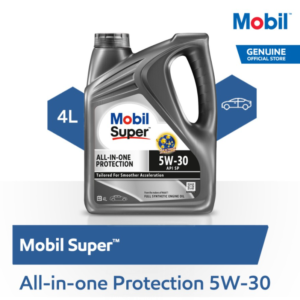
Car Oil – Super All in One Protection 5W-30 (4 Liters)
The question that often arises from 5W-30 oil users is how far this oil can be used before it needs to be replaced. Recommendations from oil manufacturers usually indicate that 5W-30 oil can be used safely up to a distance of 7,000 to 10,000 km.
However, other factors such as road conditions and driving style can also affect oil resistance. For those who often drive on crowded city streets, it is recommended to change the oil faster, which is every 5,000 km to maintain engine performance.
The best choice for tropical climate and vehicle engine needs in Indonesia
For tropical areas such as Indonesia which tends to have warm temperatures throughout the year, 5W-30 oil is more recommended because it has a higher viscosity in hot temperatures. Although 0W-20 oil can also be used, especially on new vehicles designed for fuel efficiency, 5W-30 oil is more resistant to high temperatures which are common in big cities.
Comparison table of oil advantages and disadvantages 0W-20 and 5W-30
The following is a summary of the advantages and disadvantages of both types of oil to help you choose according to your vehicle’s needs:
oil type
Advantages
Deficiency
Oil 0W-20
High fuel efficiency, good performance at low temperature
Not suitable for old machines, shorter service life
Oil 5W-30
Better protection at high temperature, longer mileage
Higher fuel consumption, less effective at cold temperatures
Conclusion
The selection of the right engine oil between 0W-20 and 5W-30 is very dependent on the condition of the engine, driving style, and the surrounding environment. For modern vehicles with high fuel efficiency requirements, 0W-20 oil can be an ideal choice. However, if the vehicle is used more often in high temperature conditions or for long mileage, 5W-30 oil can provide better protection for the engine.
By understanding the characteristics, advantages, and disadvantages of each oil, you can choose the most suitable product to maintain optimal vehicle performance.
LidahTekno.com is supported by Google Adsense advertising to provide content for you.Please consider disabling AdBlocker or adding us to your whitelist so we can continue providing the best technology information and tips.Thank you for your support!