Why do electric car batteries run out quickly on the highway

Differences in the energy consumption of electric vehicles in urban lanes and toll roads
The use of electric vehicles or electric vehicles (EV) in urban lanes often shows extraordinary efficiency thanks to the regenerative braking system that continues to recharge during congestion. However, the situation will change drastically when the battery car is carried on a constant speed on the highway at high speed.
Many owners of electric vehicles are surprised when they see the percentage of batteries dropping much faster than when driving on routes within the city. This phenomenon triggers technical questions regarding the energy-draining mechanism that occurs in the battery cell when the electric motor is forced to work at high speeds without any breaks for independent power recovery.
1. Aerodynamic and inertia resistance at high speed
The main cause of draining battery power on toll roads is air resistance or drag force which increases exponentially to speed. When a car is going twice as fast, the air resistance that the engine has to fight has not only doubled, but has increased to four times. The electric motor must emit a very large electric current continuously to keep the vehicle’s momentum stable against the wind from the front.
At low speeds in urban areas, this aerodynamic barrier has almost no significant effect on energy consumption. However, when the car hits a speed above 100 km/h, most of the energy from the battery runs out just to split the air. In contrast to gasoline engine cars that have a multi-speed transmission to keep the engine speed low at high speeds, the majority of electric cars only use a one-speed transmission which makes the electric motor rotate very fast and consume more power.
2. Absence of regenerative braking systems in the freeway
One of the main advantages of electric vehicles is the regenerative braking technology, where the electric motor turns into a generator when the gas pedal is released or the brakes are stepped on. In a city full of red light and congestion, this system is very effective in returning some of the kinetic energy back into the battery, so that the mileage becomes more durable. However, on toll roads, the driving pattern tends to be stable and the braking process rarely occurs.
Without the moment of stopping or slowing, the battery only undergoes a constant discharging process without any recharging input from the braking. This makes the energy cycle unidirectional and very draining the electrical backup in the battery cell. This non-stop driving condition is technically the least ideal scenario for electric car energy management systems designed to benefit from dynamic and fluctuating driving patterns.
3. High temperature load on battery thermal management system
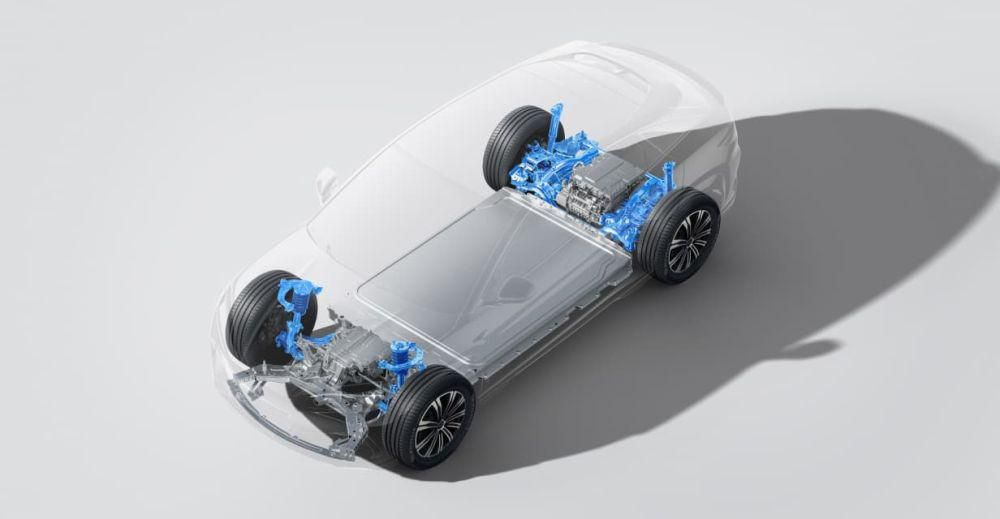
Speeding up on the highway for a long time causes the electric motor and the battery to work at peak loads, which automatically generates excess heat. To keep the chemical components in the battery from being damaged or degraded due to high temperatures, the active cooling system in the electric car will work with the maximum intensity. The coolant pump and electric radiator fan will suck up considerable power from the main battery to lower the system temperature.
The additional burden of this thermal management system is often not realized by the driver as one of the energy waste factors. In addition, the use of comfort features such as air conditioning which is set at very cold temperatures when penetrating the hot weather on the toll road also increases the cumulative electrical current load. The combination of heavy air resistance, the absence of regenerative charging, and the need for cooling components is what makes the mileage of electric cars shrink when being driven fast on routes outside the city.


Ready to dominate the Chinese car market, Geely is ready to overthrow BYD